
Welcome to
St Mary-on-the-Rock
and St James the Less
We are two churches in the United Diocese of Aberdeen and Orkney within the Scottish Episcopal Church which is part of the global Anglican Communion. We seek to be churches filled with God’s love; giving it away to others.
 St Mary-on-the-Rock church, Ellon


St Mary-on-the-Rock Church is in Craighall, in the scenic centre of the historic riverside town of Ellon.
Saint Mary-on-the-Rock Church celebrates the Eucharist each Sunday at 11:00am, and on Wednesday’s at 10:00am.

St James the Less Church is on Chapelhill, a mile from the quaint coastal village of Cruden Bay.
St James the Less Church celebrates the Eucharist each Sunday at 9:30am.
Worship
We would love to have you join us for worship. Simply come as you are: we try to welcome everyone in a non-judgemental way. Our friendly congregations seek to develop the ministry of everyone, allowing people to find what God is asking of them and the gifts God is giving to them.
What’s On
Latest News
Lent Study. All welcome. Led by the Rector. St Mary Church Hall 11th March 10am St James Cruden Bay in Church 13th March 2pm

Our Mission Prayer
“Father, pour out your Spirit upon us, and grant us a new vision of your glory, a new experience of your power, a new faithfulness to your word, and a new consecration to your service, that your love may grow among us and your kingdom come; through Jesus Christ our Lord. Amen.”

St Mary on the Rock Episcopal Church
Charity number: SC008825
St Mary-on-the-Rock Church
1 South Road
Ellon
Scotland
AB41 9NP

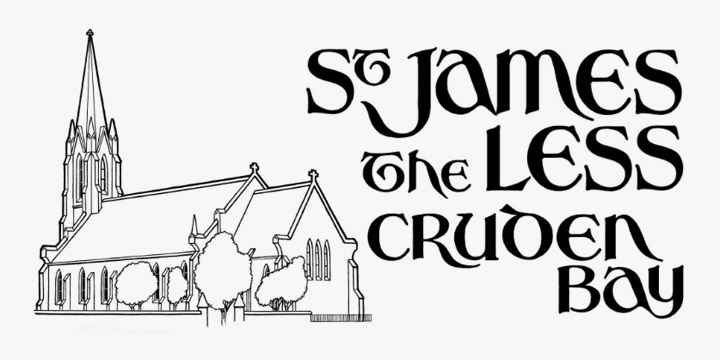
St James Episcopal Church Cruden
Charity number: SC013851
St James the Less Church
Chapelhill
Cruden Bay
Scotland
AB42 0SF
